
Preventive maintenance is redefining how critical well control equipment is managed in offshore and industrial environments. This blog explores how condition-based maintenance (CBM), supported by Digital BOP Assurance (DBA), enables real-time monitoring, advanced analytics, and predictive insight to reduce downtime, extend equipment lifespan, and improve operational safety. By combining engineering expertise, data-driven intelligence, and AI-supported analysis, this approach delivers measurable results across BOP testing, pressure testing, and well integrity management.

blog card

In this blog...

we explore how advanced BOP maintenance technologies are enabling a new approach to industrial maintenance—one that prioritizes prediction over reaction. In heavy machinery operations, particularly in oil and gas, the ability to anticipate equipment failure before it occurs represents a major step forward in operational efficiency and risk mitigation.

1.From Reactive Maintenance to Condition-Based Strategies

Traditional BOP maintenance programs often rely on fixed schedules or reactive interventions. While common, these approaches can lead to unnecessary maintenance activities or unexpected failures that disrupt operations and increase costs.

Condition-based maintenance introduces a more efficient and data-driven method by continuously assessing equipment health through real-time monitoring and analytics.

Key advantages of CBM include:

  • Maintenance activities aligned with actual equipment condition
  • Reduced unplanned downtime and emergency repairs
  • Improved planning for BOP pressure testing and drawdown tests
  • Better alignment with API Standard 53 BOP testing requirements
By integrating CBM into BOP engineering and operations, teams gain higher confidence in equipment readiness while reducing operational risk.

2. How Digital BOP Assurance (DBA) Supports Predictive Maintenance

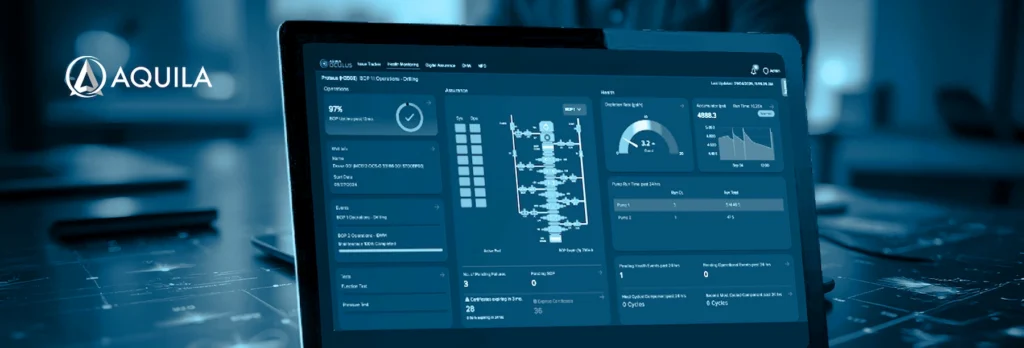
Aquila’s Digital BOP Assurance applies an integrated approach that combines real-time data acquisition, advanced analytics, and AI-supported models to predict equipment behavior.

DBA technology leverages:

  • Advanced sensors for real-time monitoring of BOP test data
  • Digital BOP testing software for pressure testing and circular chart analysis
  • Machine learning algorithms that identify trends and anomalies
  • Historical BOP testing data analysis to improve prediction accuracy over time
This capability supports remote digital pressure testing for BOPs, enabling engineers to evaluate performance without operational disruption. As the system evolves, predictive models achieve high levels of success in identifying early indicators of degradation, supporting proactive intervention.

3. Operational Benefits Across Safety, Reliability, and Performance

The application of digital BOP testing services and predictive analytics delivers proven benefits across multiple operational dimensions.

Operational and financial benefits include:

  • Reduced maintenance costs through targeted interventions
  • Extended equipment lifespan by addressing issues before escalation
  • Improved safety outcomes by mitigating risks associated with BOP failure
  • Higher operational efficiency through reduced downtime and improved execution
Additionally, the integration of cybersecurity practices—such as data and network security, offshore cyber security, and oil and gas cybersecurity—helps protect digital BOP testing systems from cyber threats to oil and gas operations.

Conclusion

The future of BOP maintenance lies in evolving from traditional maintenance models to predictive, data-driven strategies grounded in engineering insight. Digital BOP Assurance represents a leader in proved performance by combining real-time monitoring, AI, and BOP engineering expertise into a scalable and reliable framework.

As oil and gas technologies continue to advance, predictive maintenance supported by digital BOP testing efficiency and well integrity software will play a central role in supporting safe, compliant, and high-performing operations.

By adopting this integrated approach, operators position themselves for measurable results—enhancing reliability, improving safety, and strengthening operational decision-making over time.

For decades, Blowout Preventer (BOP) testing has followed rigid schedules designed in an era when real-time system insight simply did not exist. While these procedures were essential for verifying well control capability, modern technology now allows the industry to rethink how BOP assurance, BOP pressure testing, and system reliability are evaluated.

blog card

In this blog...

we explore Aquila’s new approach centered on performing BOP function testing every 14 days while extending BOP pressure testing to 28 days. Supported by digital BOP testing software, modern analytics, and real-time monitoring systems, this model maintains safety while improving reliability and reducing unnecessary stress on critical BOP components.

1. Balancing BOP Testing Frequency and Equipment Reliability

Traditional BOP pressure test procedures often involve frequent high-pressure cycles designed to verify sealing integrity and operational readiness. However, these cycles also introduce mechanical stress across seals, valves, and regulators.

An optimized testing model proposes:

  • BOP function testing every 14 days
  • BOP pressure testing every 28 days

This approach maintains verification of well control capability while reducing the number of high-pressure cycles applied to the system.

Reducing excessive pressure cycling can support digital BOP testing efficiency by limiting mechanical fatigue on critical components while still meeting API Standard 53 BOP testing verification requirements.

For BOP engineers and drilling teams, this balanced testing approach allows operational verification without unnecessarily increasing wear on the equipment.


2. The Role of Digital BOP Testing and Data Analysis

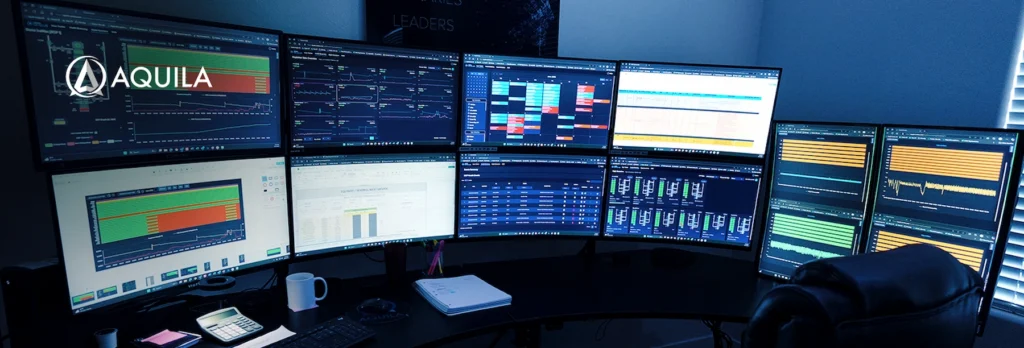
One of the most important developments in modern BOP engineering is the ability to capture and analyze test performance through digital BOP testing software rather than relying only on manual reporting.

With digital BOP testing services, function tests can capture key performance indicators such as:

  • Gallon consumption during actuation
  • Opening and closing response time
  • Hydraulic pressure behavior
  • System response trends across multiple tests

These data points enable deeper BOP testing data analysis, helping engineers detect early signs of equipment degradation. For example:

  • Increased gallon consumption may indicate internal hydraulic leakage.
  • Slower actuation times may suggest wear in control components.
  • Variations in pressure behavior may highlight developing system instability.

Instead of recording simple pass/fail results, digital BOP testing software enables engineers to analyze trends over time, creating a more comprehensive understanding of BOP system health.

3. Real-Time Monitoring and Continuous BOP System Insight

Beyond scheduled BOP tests, modern real-time monitoring systems allow operators to observe system behavior continuously.

One important performance indicator is BOP drawdown or depletion rate, which measures how quickly hydraulic pressure decreases within the system. Monitoring this parameter through RTM drilling systems can help detect:

  • Internal hydraulic leaks
  • Valve seat degradation
  • Seal wear within the control system

When integrated with BOP tracking platforms and well integrity software, these insights provide engineers with continuous system visibility.

Combining digital pressure testing BOP data, circular chart for pressure testing analysis, and real-time system monitoring helps operators break traditional data silos that often exist between rig systems, testing reports, and engineering teams.

The result is a more connected environment where BOP testing companies, drilling contractors, and operators can evaluate system performance with greater clarity

Conclusion

Modern BOP engineering practices are evolving as digital technologies become more integrated into offshore operations.

By combining 14-day BOP function testing, 28-day BOP pressure testing, Digital BOP testing services, Remote digital pressure, testing Real-time monitoring systems, and BOP tracking and advanced BOP testing data analysis, operators can gain deeper insight into BOP system integrity and availability.

This data-driven approach to BOP testing supports improved reliability, reduces unnecessary equipment stress, and provides engineers with stronger visibility into the performance of one of the most critical safety systems in offshore drilling.

With digital monitoring and analytics, the BOP evolves from a system verified only during scheduled tests into one that can be continuously understood and evaluated through data.

Let's Chat