Human error has long been a critical challenge in offshore operations, impacting safety, efficiency, and asset integrity. As the industry evolves, integrating digital technologies like real-time monitoring systems, AI, and digital BOP testing it’s essential. Traditional, manual processes leave too much room for inconsistency, delayed responses, and missed signals. In an environment where every second and every decision matters, that gap is no longer acceptable.
we explore how offshore operations can move beyond these limitations by combining engineering expertise with digital tools. From improving BOP testing efficiency to enabling real-time visibility across critical systems, the shift toward digital operations is redefining how decisions are made offshore — faster, more accurately, and with far greater confidence.
Offshore environments are complex, high-risk, and data-intensive. Traditional processes — often manual and reactive — leave room for human error, especially in critical activities like BOP pressure testing, bop test data analysis, and bop tracking.
Key challenges include:
Even when following standards like API Standard 53 BOP testing, human dependency can lead to inefficiencies and overlooked risks.
The shift toward digital is what stands out in offshore performance. Technologies allow operators to move from reactive to predictive operations.
What digital integration delivers:
This is where Aquila stands apart — using digital tools fully integrated with AI to transform complex BOP data into real-time, actionable intelligence.
Collecting data is no longer the challenge in offshore operations. The real challenge is turning that data into decisions — fast, precise, and reliable under pressure.
With digital tools fully integrated with AI, operators can move beyond fragmented information and start operating with true clarity. Instead of reacting to isolated data points, they gain a continuous, contextual understanding of what’s happening across critical systems.
This is where Aquila stands apart — not just collecting data, but structuring, interpreting, and validating it through AI-driven digital systems.
Aquila stands out among other companies by combining engineering expertise with cutting-edge technology. Whether you're analyzing pressure patterns during a test or monitoring equipment status remotely, our software helps ensure the right decision.
Technology, and specially AI, is no longer a futuristic add-on in offshore. In an industry where precision and reliability are critical, the future belongs to those who combine engineering expertise with intelligent digital systems — creating safer, smarter, and more efficient offshore operations
Artificial Intelligence (AI) is becoming a key element in the evolution of oil and gas technologies, supporting safer operations, optimized performance, and improved decision-making. This blog explores how AI enhances Blowout Preventer (BOP) engineering through real-time monitoring systems, digital BOP testing software, and advanced data analysis. It also highlights how Aquila applies AI within an integrated approach to BOP digital assurance, delivering measurable results in safety, efficiency, and operational reliability.
we explore how Artificial Intelligence supports the evolving needs of the oil and gas industry, particularly in BOP testing, real-time monitoring, and digital pressure testing for BOP systems. As offshore operations become more complex and data-driven, AI plays an important role in improving BOP test data analysis, supporting well integrity software, and strengthening decision-making processes.
Artificial Intelligence is increasingly embedded in oil and gas cyber security, subsea solutions, and operational monitoring. Rather than replacing engineering expertise, AI enhances it by supporting data interpretation and operational awareness.
Key areas where AI contributes include:
By combining AI with real-time monitoring and well-established engineering practices, operators gain a clearer understanding of equipment behavior and operational risks.
AI plays a valuable role in digital BOP testing services by supporting more consistent, structured, and traceable BOP pressure testing processes.
Key Applications in BOP Engineering
Through remote digital pressure testing and advanced data processing, AI helps reduce manual workload while improving the quality and reliability of test results. This supports both offshore safety and operational efficiency.
Aquila applies AI as part of an integrated approach to BOP digital assurance, combining BOP engineering expertise with digital pressure testing BOP tools and real-time monitoring.
This approach supports:
Aquila’s solutions are built on technologies tested on the field, delivering a leader in proved performance for digital BOP testing and assurance services.
Artificial Intelligence is playing a growing role in the evolution of oil and gas operations, particularly in BOP testing, real-time monitoring, and offshore cybersecurity. By supporting digital pressure testing for BOP systems, improving data-driven insights, and strengthening cyber security oil and gas strategies, AI contributes to safer and more efficient operations.
At Aquila, AI is applied to optimize BOP performance and safety through structured digital BOP assurance solutions. By combining AI, engineering expertise, and real-time monitoring systems, Aquila delivers proven benefits and supports the evolving needs of offshore operations in a secure, efficient, and reliable way.
As pressure testing evolves, many operators are shifting from paper-based workflows and circular charts to digital BOP testing systems. But the transition is not simple. We will explore the biggest challenges companies face when digitalizing pressure testing processes — and how Aquila’s approach helps teams achieve measurable results in efficiency, data quality, and well integrity assurance.
we look at the evolving landscape of pressure testing digitalization across offshore operations. As BOP engineers, well integrity teams, and drilling contractors adopt digital BOP testing software, new challenges appear. We separated two common challenges leaders face today, and the tested-on-the-field strategies that help overcome them.
For decades, pressure tests relied on circular charts, handwritten notes, and manual sign offs. Moving to digital platforms introduces new expectations for accuracy, consistency, and compliance.
Key challenges include:
How to overcome it:
How Aquila helps:
Aquila Digital Pressure Testing offers an integrated approach for data capture, automated validation, and secure reporting — reducing manual interpretation errors and supporting audit-ready documentation with proven performance.
As rigs adopt BOP digital assurance, well integrity software, and remote operations, cybersecurity becomes critical.
Pressure-testing data flows now include surface systems, rig networks, cloud environments, and operational technologies — and each layer requires proper protection.
Common cybersecurity concerns:
How to overcome it:
How Aquila helps:
Aquila’s digital ecosystem supports oil & gas cybersecurity standards with secure cloud environments, encrypted data flows, and role-based access — all aligned with the needs of subsea solutions in oil and gas operations.
Digital pressure testing is no longer optional for operators who want to improve reliability, reduce non-productive time, and support audit readiness. By addressing challenges in compliance and cybersecurity companies can build a more consistent and data-driven approach to BOP testing.
Aquila delivers a new approach to digital BOP testing — with secure data flows, structured procedures, and real-time monitoring tools that provide measurable results for well integrity teams, drilling contractors, and BOP engineers.
Artificial Intelligence (AI) is transforming the oil and gas sector by offering new ways to predict, prevent, and respond to well control events. By combining AI with real-time monitoring systems, digital BOP testing software, and advanced data analysis, companies can strengthen well integrity, enhance operational safety, and achieve more reliable performance offshore.
We explore how AI and real-time monitoring technologies are reshaping the way drilling teams identify and mitigate well control risks. From integrating digital BOP testing services to leveraging predictive algorithms, this article highlights the critical role of data, automation, and digital assurance in achieving safer and smarter offshore operations.

AI has become a cornerstone of modern oil and gas technologies, enabling predictive capabilities that were once impossible through manual processes alone. When integrated with real-time monitoring (RTM) drilling systems, AI can:
These predictive insights, powered by machine learning models trained on vast datasets, allow for proactive decision-making. The result is improved well integrity, reduced downtime, and enhanced compliance with API Standard 53 BOP testing and safety protocols.
Blowout Preventers (BOPs) are critical to maintaining well control, and innovations in Digital Pressure Testing— Aquila’s digital solution — are revolutionizing how engineers approach maintenance and assurance. Unlike traditional methods that rely on manual circular charts, Digital Pressure Testing automates the entire process, providing accurate, traceable, and data-driven test results.
Through Aquila’s digital platform, operators can:
Digital Pressure Testing not only streamlines operations but also integrates seamlessly with BOP digital assurance and real-time monitoring systems. With intelligent data analysis, BOP engineers gain the insights they need to ensure reliability, performance, and operational safety.
As the oil and gas industry adopts more connected, digital systems, cybersecurity in oil and gas operations has become a top priority. The use of AI, real-time monitoring, and digital pressure testing for BOP solutions introduces new layers of complexity — and potential vulnerability — to offshore networks.
To manage security risks in the oil & gas sector effectively, companies must:The integration of cybersecurity for oil rigs safeguards sensitive operational data and reinforces trust in digital technologies.
The Aquila Edge Kiosk is a bridge between real-time monitoring, digital BOP testing, and well integrity assurance. By putting data directly at your fingertips, it eliminates inefficiencies, reduces human error, and ensures that operations run smoothly and safely. And because it works entirely offline, the Edge Kiosk does not require an internet connection to operate — ensuring reliability even in remote offshore environments.
We’ll explore the evolving relationship between human expertise and technology in offshore operations. From BOP pressure testing to oil and gas cybersecurity, the connection between people and digital tools is reshaping how we approach safety and operational excellence. Far from replacing the human element, digital solutions are enhancing decision-making, reducing risks, and building resilience in offshore environments.
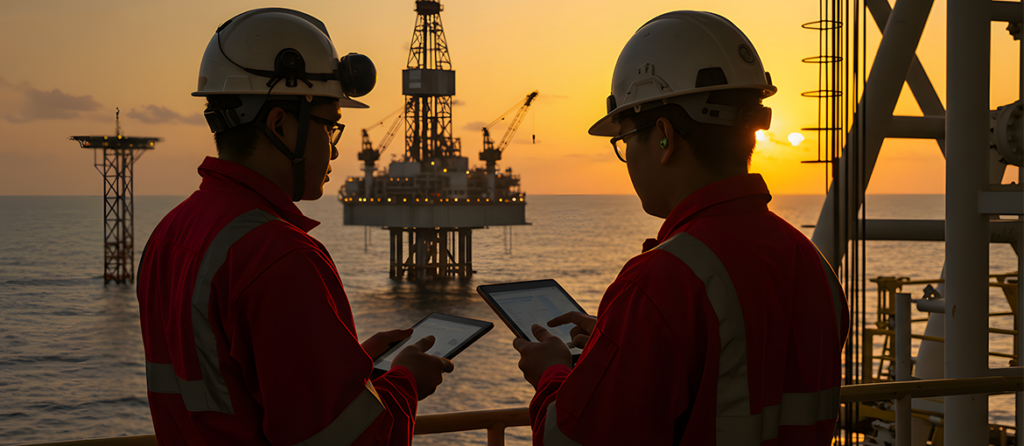
The biggest advantage of the Edge Kiosk is speed and simplicity.
This shift to immediate, on-site data access enhances operational safety and reduces downtime, aligning with API Standard 53 BOP testing requirements.
The Edge Kiosk is fully integrated into Aquila’s digital BOP testing services and real-time monitoring systems.
Offshore operations demand tools that are rugged, reliable, and secure. The Aquila Edge Kiosk was designed with those needs in mind:
This makes it not just a tool, but a long-term partner in digital transformation for offshore operators.
The Aquila Edge Kiosk is more than a digital access point: it’s the future of offshore data management. By combining real-time monitoring systems, digital BOP testing software, and well integrity solutions, it places critical insights directly in the hands of those who need them most. The result is improved safety, smarter compliance, and faster decision-making — all delivered through a secure and user-friendly platform designed for the offshore environment.
With the Edge Kiosk, Aquila continues to lead the way in digital transformation, BOP engineering, and oil and gas cybersecurity, ensuring that operators have everything they need, right at their fingertips.