Blowout Preventers (BOPs) are critical to well control and operational safety in oil and gas drilling. This blog explains how Fault Tree Analysis (FTA), combined with digital BOP testing and real-time monitoring systems, supports risk reduction, reliability optimization, and data-driven decision-making across offshore operations.
blog card

In this blog…

we demonstrate how FTA is applied to map potential failure pathways within BOP systems and prioritize critical risk scenarios. The discussion also highlights how integrating digital testing platforms, real-time performance monitoring, and structured operational data enables earlier anomaly detection, improved diagnostics, and more informed maintenance strategies for complex subsea equipment.

1. Understanding Fault Tree Analysis in BOP Engineering

Fault Tree Analysis (FTA) is a structured method used to evaluate how individual component failures can combine to cause system-level events, such as a BOP failure or loss of well control.

In BOP engineering, FTA starts with a defined top event—such as hydraulic system leakage within the BOP control system, failure during a BOP pressure test, or inability of the BOP to properly seal the well—and breaks it down into contributing factors, including:

By mapping these relationships using logical structures, engineers gain clear visibility into how risks propagate across the system and where mitigation efforts are most effective.
2. Applying FTA with Digital BOP Testing and Real-Time Monitoring

When combined with digital BOP testing services and real-time monitoring systems, Fault Tree Analysis becomes a practical operational tool rather than a static engineering exercise.

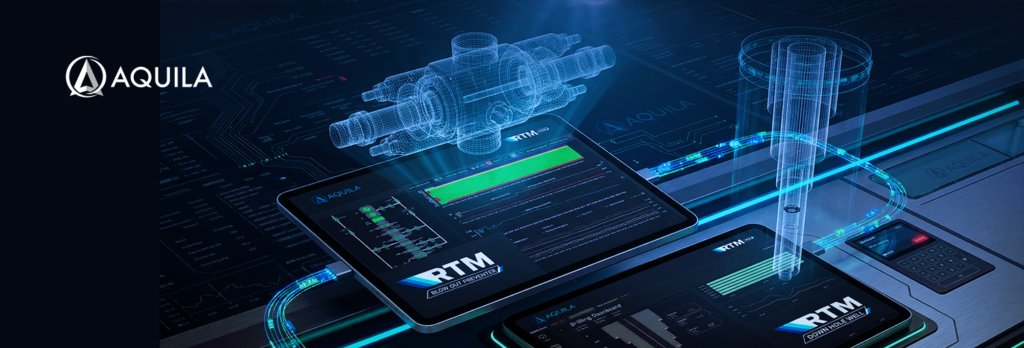
Digital BOP testing software and remote digital pressure testing enable continuous visibility into pressure behavior, faster identification of anomalies during BOP pressure testing, and structured BOP test data analysis aligned with API Standard 53 BOP testing requirements.

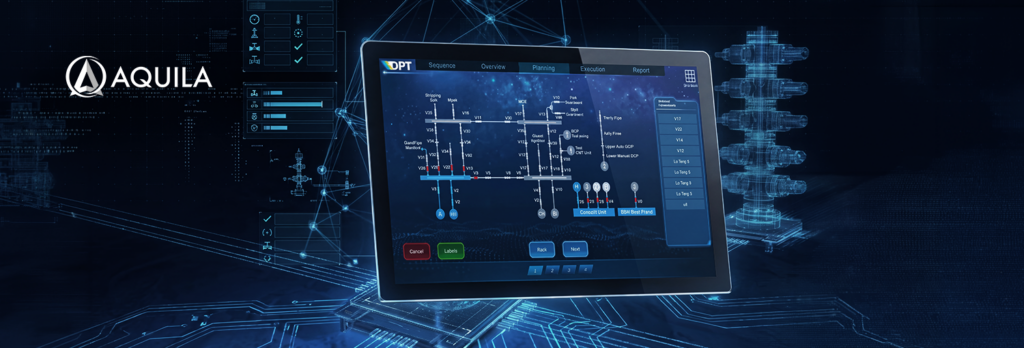
At Aquila, this approach is supported through Oculus, where fault tree analysis is directly connected to live operational data. By integrating FTA with our real-time monitoring systems, BOP test data, and digital assurance workflows, teams gain a clearer understanding of risk propagation and system behavior throughout drilling and testing operations.

2. Risk Reduction, Compliance, and Operational Confidence

FTA supports proactive risk reduction by helping operators focus on the most critical failure modes and system dependencies. When aligned with well integrity software and BOP tracking systems, it contributes to:

In addition, secure digital environments and attention to oil and gas cybersecurity—including data and network security—are essential to protect real-time monitoring systems and digital pressure testing for BOPs from cyber threats to the oil and gas industry.

Conclusion

Fault Tree Analysis remains a foundational tool for BOP engineering, but its full value is realized when integrated with digital BOP testing software, real-time monitoring, and structured data analysis.

This evolving approach supports measurable results in safety, compliance, and operational reliability—helping operators reduce risk, improve testing efficiency, and maintain high levels of system confidence in demanding offshore environments.

Preventive maintenance is redefining how critical well control equipment is managed in offshore and industrial environments. This blog explores how condition-based maintenance (CBM), supported by Digital BOP Assurance (DBA), enables real-time monitoring, advanced analytics, and predictive insight to reduce downtime, extend equipment lifespan, and improve operational safety. By combining engineering expertise, data-driven intelligence, and AI-supported analysis, this approach delivers measurable results across BOP testing, pressure testing, and well integrity management.

blog card

In this blog...

we explore how advanced BOP maintenance technologies are enabling a new approach to industrial maintenance—one that prioritizes prediction over reaction. In heavy machinery operations, particularly in oil and gas, the ability to anticipate equipment failure before it occurs represents a major step forward in operational efficiency and risk mitigation.
1.From Reactive Maintenance to Condition-Based Strategies

Traditional BOP maintenance programs often rely on fixed schedules or reactive interventions. While common, these approaches can lead to unnecessary maintenance activities or unexpected failures that disrupt operations and increase costs.

Condition-based maintenance introduces a more efficient and data-driven method by continuously assessing equipment health through real-time monitoring and analytics.

Key advantages of CBM include:

  • Maintenance activities aligned with actual equipment condition
  • Reduced unplanned downtime and emergency repairs
  • Improved planning for BOP pressure testing and drawdown tests
  • Better alignment with API Standard 53 BOP testing requirements
By integrating CBM into BOP engineering and operations, teams gain higher confidence in equipment readiness while reducing operational risk.

2. How Digital BOP Assurance (DBA) Supports Predictive Maintenance

Aquila’s Digital BOP Assurance applies an integrated approach that combines real-time data acquisition, advanced analytics, and AI-supported models to predict equipment behavior.

DBA technology leverages:

  • Advanced sensors for real-time monitoring of BOP test data
  • Digital BOP testing software for pressure testing and circular chart analysis
  • Machine learning algorithms that identify trends and anomalies
  • Historical BOP testing data analysis to improve prediction accuracy over time
This capability supports remote digital pressure testing for BOPs, enabling engineers to evaluate performance without operational disruption. As the system evolves, predictive models achieve high levels of success in identifying early indicators of degradation, supporting proactive intervention.

3. Operational Benefits Across Safety, Reliability, and Performance

The application of digital BOP testing services and predictive analytics delivers proven benefits across multiple operational dimensions.

Operational and financial benefits include:

  • Reduced maintenance costs through targeted interventions
  • Extended equipment lifespan by addressing issues before escalation
  • Improved safety outcomes by mitigating risks associated with BOP failure
  • Higher operational efficiency through reduced downtime and improved execution
Additionally, the integration of cybersecurity practices—such as data and network security, offshore cyber security, and oil and gas cybersecurity—helps protect digital BOP testing systems from cyber threats to oil and gas operations.

Conclusion

The future of BOP maintenance lies in evolving from traditional maintenance models to predictive, data-driven strategies grounded in engineering insight. Digital BOP Assurance represents a leader in proved performance by combining real-time monitoring, AI, and BOP engineering expertise into a scalable and reliable framework.

As oil and gas technologies continue to advance, predictive maintenance supported by digital BOP testing efficiency and well integrity software will play a central role in supporting safe, compliant, and high-performing operations.

By adopting this integrated approach, operators position themselves for measurable results—enhancing reliability, improving safety, and strengthening operational decision-making over time.

Real-Time Operational Centers (RTOCs) play a critical role in modern offshore energy operations. They serve as centralized environments where real-time data, engineering expertise, and advanced digital systems come together to support safe, efficient, and consistent execution across offshore assets.

blog card

In this blog...

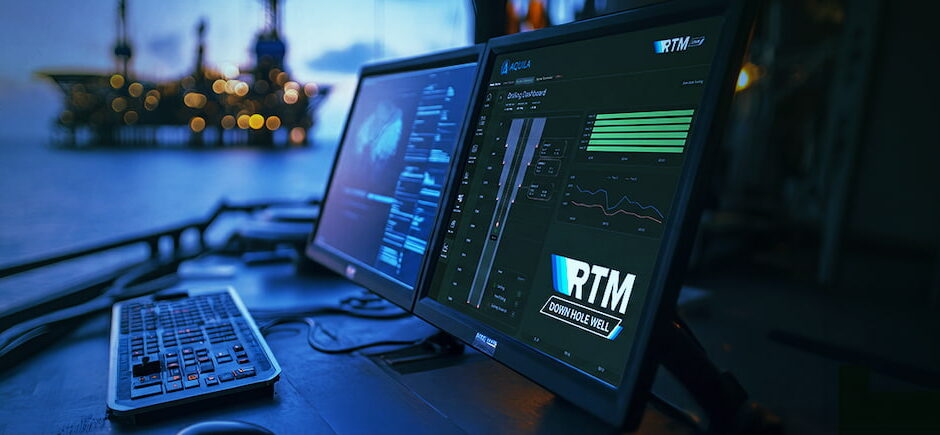
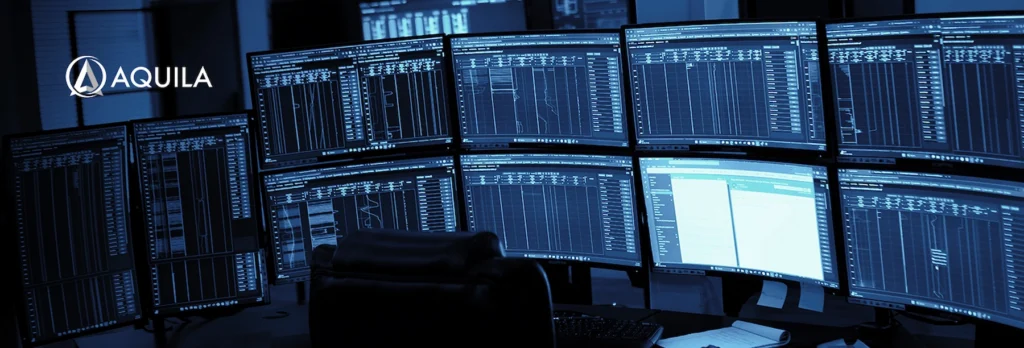
we’ll show how at Aquila, the RTOC is not just a monitoring room — it is an operational hub designed to support offshore teams with real-time insights, engineering intelligence, and digital assurance, around the clock.
1. The Role of a 24/7 RTOC in Offshore Operations

Offshore operations operate continuously. Drilling, well integrity activities, BOP testing, and production monitoring do not pause — and neither does operational oversight. Aquila’s Real-Time Operational Center is structured to support this rhythm by providing continuous visibility and engineering support across assets and time zones.

Through real-time monitoring systems, integrated data pipelines, and engineering workflows, the RTOC enables teams to:

  • Monitor critical operational parameters in real time
  • Support offshore crews with engineering analysis and recommendations
  • Ensure alignment with operational procedures and regulatory requirements
  • Maintain consistency across rigs, wells, and campaigns

This continuous operational presence strengthens decision-making and reduces uncertainty in high-consequence offshore environments.

2. Inside Aquila’s RTOC: Technology and Expertise Working Together

What defines Aquila’s RTOC is the combination of advanced digital technology and highly qualified professionals. Engineers, analysts, and operational specialists work side by side, using real-time data to support offshore execution with precision and confidence.

Key capabilities of Aquila’s RTOC include:

  • Real-time monitoring of drilling and well operations
  • Digital BOP testing support, including pressure testing and data analysis
  • Integration of operational data with engineering models and historical context
  • Structured workflows that support consistency and auditability

Rather than operating in isolation, the RTOC is closely connected to offshore teams, acting as an extension of the rig — providing clarity, validation, and technical support when it matters most.

3. Supporting Offshore Teams Through Digital Assurance

In offshore operations, visibility alone is not enough. Teams need confidence that systems, equipment, and processes are performing as expected. Aquila’s RTOC supports this by moving beyond basic monitoring toward operational assurance.

By combining real-time data with engineering context, the RTOC helps:

  • Validate operational conditions during critical activities
  • Support BOP pressure testing and well integrity processes
  • Identify deviations early and support timely corrective actions
  • Ensure consistent execution across multiple assets and campaigns

This approach reinforces operational discipline while supporting offshore crews with reliable, actionable insights.

Conclusion

Aquila’s Real-Time Operational Center reflects how offshore operations work today: connected, data-driven, and highly collaborative. It is an environment where technology supports people — not the other way around — and where engineering expertise is amplified by digital systems.

By operating 24/7, Aquila’s RTOC plays a central role in supporting offshore safety, efficiency, and compliance. It brings together real-time monitoring, digital workflows, and experienced professionals to deliver measurable results across complex offshore operations.

In a sector where every decision counts, the RTOC is where operational confidence is built — continuously, consistently, and in real time.

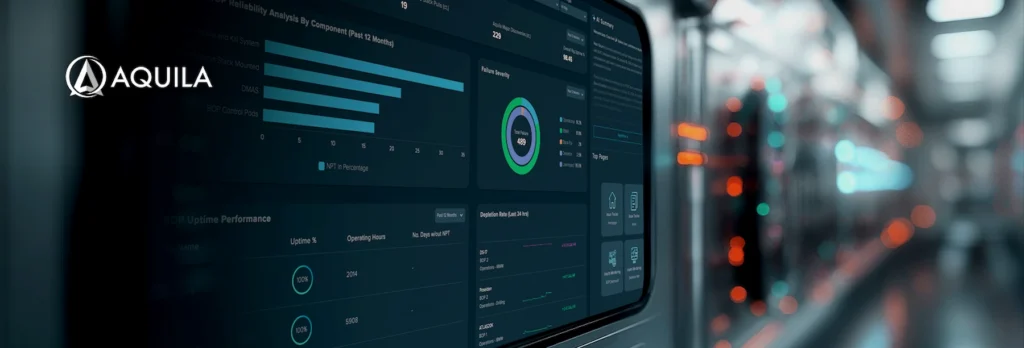
Unexpected equipment failures can lead to significant downtime, repairs, and safety concerns. With real-time monitoring systems and structured BOP test data analysis, offshore teams are gradually shifting from reactive/schedule maintenance to more predictive maintenance, data-informed strategies.

blog card

In this blog...

we examine how monitoring data—combined with digital BOP testing software and digital pressure testing—supports more consistent maintenance planning across offshore drilling operations. We highlight how BOP engineers and operations personnel use real-time analytics to anticipate issues earlier, reduce unplanned downtime, and enhance overall equipment performance.


1. From Reactive to Predictive: An Evolving Approach to Offshore Maintenance

Traditionally, offshore teams addressed equipment failures after the issue had already occurred. Today, real-time monitoring systems and data analytics allow a more preventive approach, helping teams respond earlier and with more context.

How predictive maintenance is applied:

  • Sensor-driven data collection: Pressure, temperature, and vibration sensors provide continuous data from key equipment.
  • Anomaly detection: AI tools and pattern-recognition models highlight irregular trends that may indicate emerging issues.
  • Structured alerts: Teams receive early notifications, allowing technical personnel to investigate conditions that could progress into failures.

This shift does not replace engineering expertise—it complements it with consistent, data-supported insight.

2. BOP Test Data: A Valuable and Often Underused Resource

Each BOP test generates detailed operational information, but much of this data has traditionally been underutilized. With dedicated BOP testing software, that information becomes easier to interpret and apply to maintenance planning.

Benefits of a structured BOP test data analysis approach:

  • Identifying recurring trends: Helps highlight repeated issues across similar components or equipment units.
  • Performance comparison: Supports benchmarking across rigs, time periods, or operating conditions.
  • More reliable reporting: Reduces manual entries and supports consistent documentation for compliance requirements.

When BOP tracking is combined with digital analytics, teams can better plan maintenance intervals, helping reduce unexpected repairs and improving digital BOP testing efficiency.


3. Real-Time Monitoring in Action: Examples from Offshore Operations

Predictive insights are being applied daily in real offshore environments. Below are examples of how Aquila’s real-time monitoring systems and BOP tracking tools have supported teams in identifying anomalies early and reducing operational impact.

Example 1: Solenoid manifold regulator issue detected before deployment

During daily monitoring prior to BOP deployment, the RTOC identified deviations in the solenoid manifold regulators on both pods, which appeared to be seeking set pressure. The onboard FSE was notified.

“Aquila RTOC observed a change in HPU pump cycle frequency and depletion rate. After the notification, the rig team monitored the behavior and found that the annular regulator was venting back to tank. By reviewing the pressure trends, the leaking solenoid valves were repaired before BOP deployment.”

Detecting the issue early helped the team address it before subsea operations, reducing the likelihood of unplanned interventions.

Example 2: Subsea issue identified during operations

While the BOP was deployed subsea, the RTOC detected a shift in pump cycle frequency and depletion rate, even though no BOP functions had been performed in the previous 12 hours.

“The Aquila FSE and the subsea team were notified. The ROV was mobilized and, during inspection, the yellow riser recoil valve was found with an external leak. The valve was placed in the vent position, and the depletion rate returned to expected levels.”

This example highlights how continuous real-time monitoring supports system integrity, even when operations appear stable.

Conclusion

Monitoring data has become an essential input for preventive maintenance in offshore environments. Predictive maintenance does not eliminate failures, but it helps teams act earlier and with clearer context—strengthening reliability and improving operational efficiency across BOP engineering and pressure-control workflows.

Teams looking to enhance their monitoring and testing programs can explore how Aquila’s real-time monitoring and digital BOP testing software contribute to more informed and proactive offshore operations.

Let's Chat