


Jul 30, 2026

Automation, Digitalization And The Human Role Im Offshore Operations

Automation, Digitalization And The Human Role Im Offshore Operations

The offshore oil and gas industry has already moved beyond the early adoption phase of digitalization. Real-time monitoring, digital pressure testing, and independent third-party verification are transforming operational data into engineering decisions, making offshore operations safer, more efficient, and more predictable. As a result, the role of the field engineer has become increasingly strategic—not less, but more focused on technical decision-making.

blog card

Setting the Standard for Offshore Work with Aquila Engineering

At Aquila Engineering, we deliver field-proven services built for offshore operations — Real-Time Monitoring (RTM), Digital Pressure Testing (DPT), and Independent Third-Party (I3P) authority. These aren't emerging concepts; they're the operational backbone of how leading operators manage BOP reliability and well control today. In this article, we walk through how automation and digitalization are shaping offshore work — and how your team can stay ahead.

1. The Digital Standard for Offshore Operations

Offshore operations have entered a phase where digital-enabled services are optimizing every aspect of rig performance — not as a future promise, but as current practice.

Key services driving this shift:

  • Digital Pressure Testing (DPT): Modernizes BOP pressure testing, reduces human error, and ensures standardized, regulation-compliant reporting for offshore and land operations.
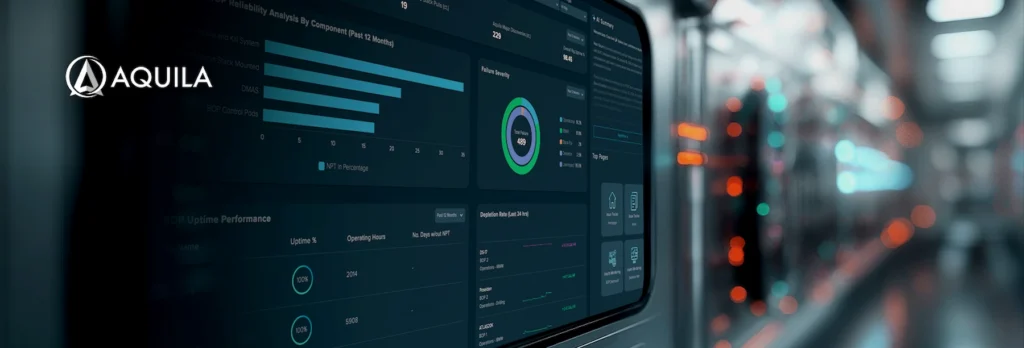
  • Real-Time Monitoring (RTM): Enables teams to track BOP and downhole equipment status and operational conditions remotely, from onshore control rooms.
  • BOP Tracking and Test Data Analysis: Delivers deep visibility into component performance, improves maintenance planning, and reduces non-productive time (NPT).
  • I3P Independent Verification: Provides impartial, third-party assessment of BOP reliability — giving operators and regulators confidence that comes from independence, not just data.

2. The Evolving Role of the BOP Engineer

Automation and digitalization don't eliminate the role of the BOP engineer — they sharpen it.

Here's how the role is evolving:

  • Data Analysis & Decision Support: Engineers now focus on interpreting RTM and DPT data to validate results and confirm safety margins.
  • System Oversight: Even the most automated processes require technical supervision on-site to catch anomalies and respond in real time.
  • Field Integration: Engineers are directly involved in deploying and optimizing digital testing and monitoring services on the rig.
  • Mentorship & Training: As digital tools become standard, experienced engineers play a critical role in training and guiding offshore teams through the transition.

At Aquila Engineering, our services are designed to make technical expertise more impactful — not to replace it. Independence, field credibility, and deep BOP knowledge remain the foundation.

3. Benefits and Challenges of Offshore Digital Transformation

Adopting RTM, DPT, and I3P services delivers measurable gains, but it also requires operational readiness and team alignment.

Benefits:

  • Reduced testing time and cost through digital pressure testing.
  • Improved safety through real-time, remote monitoring.
  • Smarter decision-making backed by reliable test data and independent verification.

Challenges:

  • Training and change management when adopting new service workflows.
  • Increased demand for data security as more systems come online.
  • The need to redefine roles for teams involved in BOP engineering and operations.

At Aquila Engineering, we address these challenges through hands-on field support, regulatory fluency (BSEE, DNV, API), and services designed to integrate directly into existing rig operations.

Conclusion

At Aquila Engineering, we believe the future of offshore operations is built by combining engineering expertise with reliable digital technologies. By connecting real-time monitoring, digital pressure testing, and independent verification, operators gain greater operational visibility, stronger reliability, and more informed engineering decisions throughout the entire life of the BOP. 

Let's Chat