Why AI-Powered Troubleshooting Is Redefining Offshore Oil & Gas Operations
May 27th, 2026
Offshore operations generate a flood of data and AI helps engineers cut through the noise to detect what matters most.
Offshore drilling operations generate thousands of data points every minute. Yet for years, the industry relied on manual interpretation, delayed reports, and reactive decision-making to manage complex, high-stakes environments. As oil and gas technologies evolve, so does the standard for operational excellence — and AI-driven real-time monitoring systems are setting that new standard.
In this blog, we explore why troubleshooting in offshore oil and gas operations has traditionally been one of the industry's greatest challenges, how artificial intelligence is transforming the way teams detect and respond to anomalies, and how Aquila's AI Troubleshooting feature — embedded within its Real-Time Monitoring (RTM) platform — is cutting response times from hours to minutes and empowering crews to act before problems escalate.

1. The Real Cost of Troubleshooting Failures Offshore
Offshore environments are among the most demanding in any industry. Between managed pressure drilling (MPD) operations, BOP pressure testing, subsea equipment monitoring, and the constant management of well integrity, crews are juggling enormous complexity — often with limited time and limited visibility.
Traditionally, troubleshooting an anomaly offshore followed a slow, manual path:
Detection: An operator notices unusual readings — often too late.
Diagnosis: Engineers spend hours (sometimes days) cross-referencing logs, sensor data, and historical records.
Decision: By the time a root cause is identified, the window to act safely has narrowed — or closed.
Unplanned shutdowns, safety incidents, and regulatory non-compliance events carry enormous financial and reputational costs. In a world where real-time monitoring drilling operations can generate tens of thousands of data points per hour, the human brain simply cannot process, prioritize, and respond fast enough without technological support.
2. Aquila's AI Troubleshooting — Built for the Realities of Offshore Operations
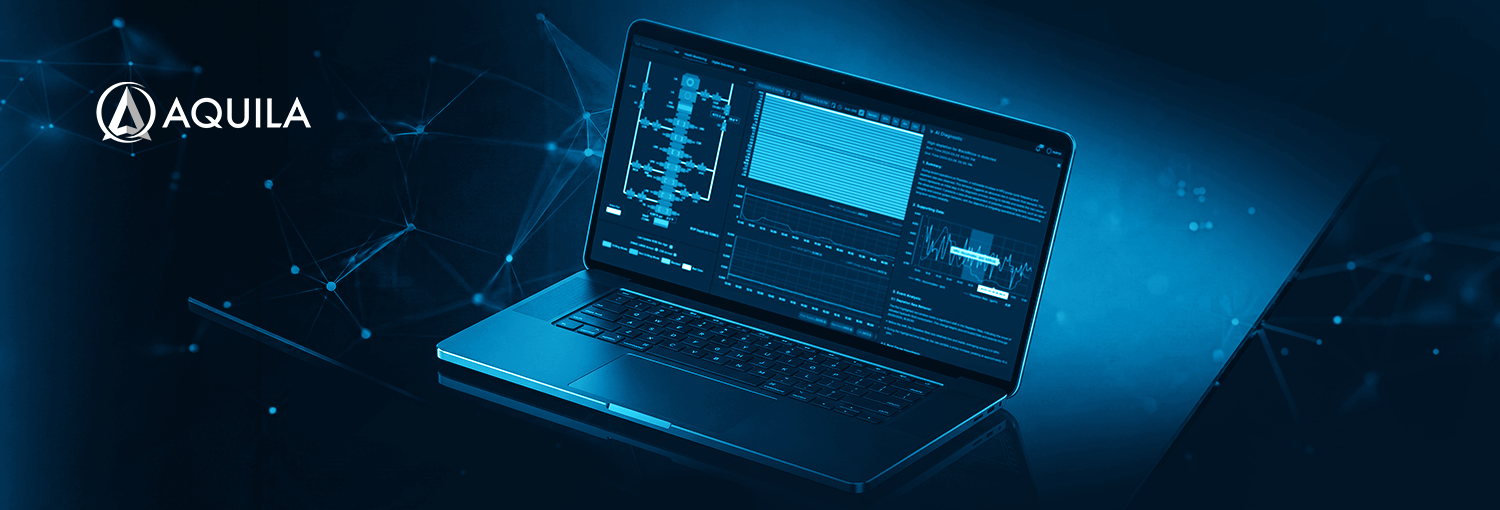
This is where artificial intelligence changes everything. Aquila's Oculus platform takes AI principles and applies them directly to the offshore oil and gas context, integrating with the tools and workflows that drilling teams already use.
Feature 1: Automated Anomaly Detection
Aquila's system scans high-frequency operational data continuously, flagging system abnormal behavior and operation deviations within seconds of occurrence. Whether it's a subtle shift in BOP pressure test readings, an unexpected deviation during a digital pressure testing sequence, or an equipment health anomaly on a subsea component, the platform catches it before it becomes a crisis.
Feature 2: Data-Driven Root Cause Analysis
When an anomaly is detected, Aquila instantly generates a structured diagnostic report that:
Links sensor data from across the operation
Quantifies the specific deviation observed
Lists the likely causes with supporting data evidence
This is the kind of structured intelligence that previously required an experienced engineer to manually assemble over the course of hours. Aquila delivers it automatically, in real time.
3. The Advantages That Matter Most
Traditional drilling platforms show you what is happening; AI-powered platforms tell you why it's happening and what to do about it. Here's what modern AI-driven real-time monitoring delivers:
Beyond Live Data — Actionable Insights
Aquila goes beyond simply presenting live data. The platform interprets what it sees, prioritizes what matters, and turns raw numbers into actionable operational insights. For crews managing complex operations like managed pressure drilling (MPD) or conducting BOP testing procedures in compliance with API Standard 53, this means fewer guesses and more confident decisions.
From Hours to Minutes — Reducing NPT and Financial Impact
Perhaps the most tangible benefit is the reduction of troubleshooting time from hours to minutes. In offshore drilling, every hour spent diagnosing an anomaly can become Non-Productive Time, generating delays and significant financial impact.
By enabling faster detection and decision-making, Aquila helps teams act before deviations escalate into unplanned shutdowns or safety-critical events. The result is reduced NPT, improved operational continuity, and measurable cost savings.
Supporting Well Integrity and Compliance
When combined with Aquila's broader suite — including digital BOP testing software, BOP digital assurance tools, and remote digital pressure testing capabilities — the AI Troubleshooting feature contributes to a comprehensive well integrity monitoring strategy. Data captured during BOP drawdown tests, BOP pressure testing
Conclusion
The offshore oil and gas industry is at an inflection point. The combination of increasingly complex operations, tightening regulatory requirements, and growing pressure to reduce non-productive time is making intelligent, AI-powered real-time monitoring not just valuable — but essential.
Aquila's AI Troubleshooting capability represents a meaningful step forward: a system that doesn't just watch operations unfold, but actively interprets, analyzes, and alerts — empowering crews to work smarter, respond faster, and operate more safely. Whether you're managing a BOP pressure testing program, navigating the complexities of managed pressure drilling, or simply striving to reduce unplanned downtime, real-time AI monitoring is the edge that modern offshore operations demand.
The data is already there. The question is whether your platform is intelligent enough to make sense of it.